In memory of the holy martyr Fabius, Pope of Rome
St. Fabius was a native of Rome, and was a presbyter in the days of the wicked Roman kings, who were especially devoted to paganism and therefore persecuted the church of God.
Saint Fabius first lived in a village near Rome, and then moved to the city itself and here he diligently engaged in the burial of the bodies of martyrs: at this time many Christians were tortured and killed for their faith, and their bodies were thrown outside the city gates to be eaten by dogs, beasts and birds; Saint Fabius secretly took the bodies of the martyrs at night and betrayed them with honor.
After the death of Maximinus [Emperor Maximian I, 235-238 A.D.] in the reign of the most holy pope of Anphyrus [In 236 A.D.] for his confession of Christ, the believers who had been hiding from persecution and kept their faith secret gathered to elect a new pope together with the bishops and presbyters in a temple unknown to the persecutors: one unremarkable house served as a temple for them in this disturbing time for Christians.
When the search began for a worthy candidate for such a high office as that of bishop of Rome, many recalled an honest and outstanding man whom no one would have thought: he, a recent arrival from the village, was one of the minor presbyters.
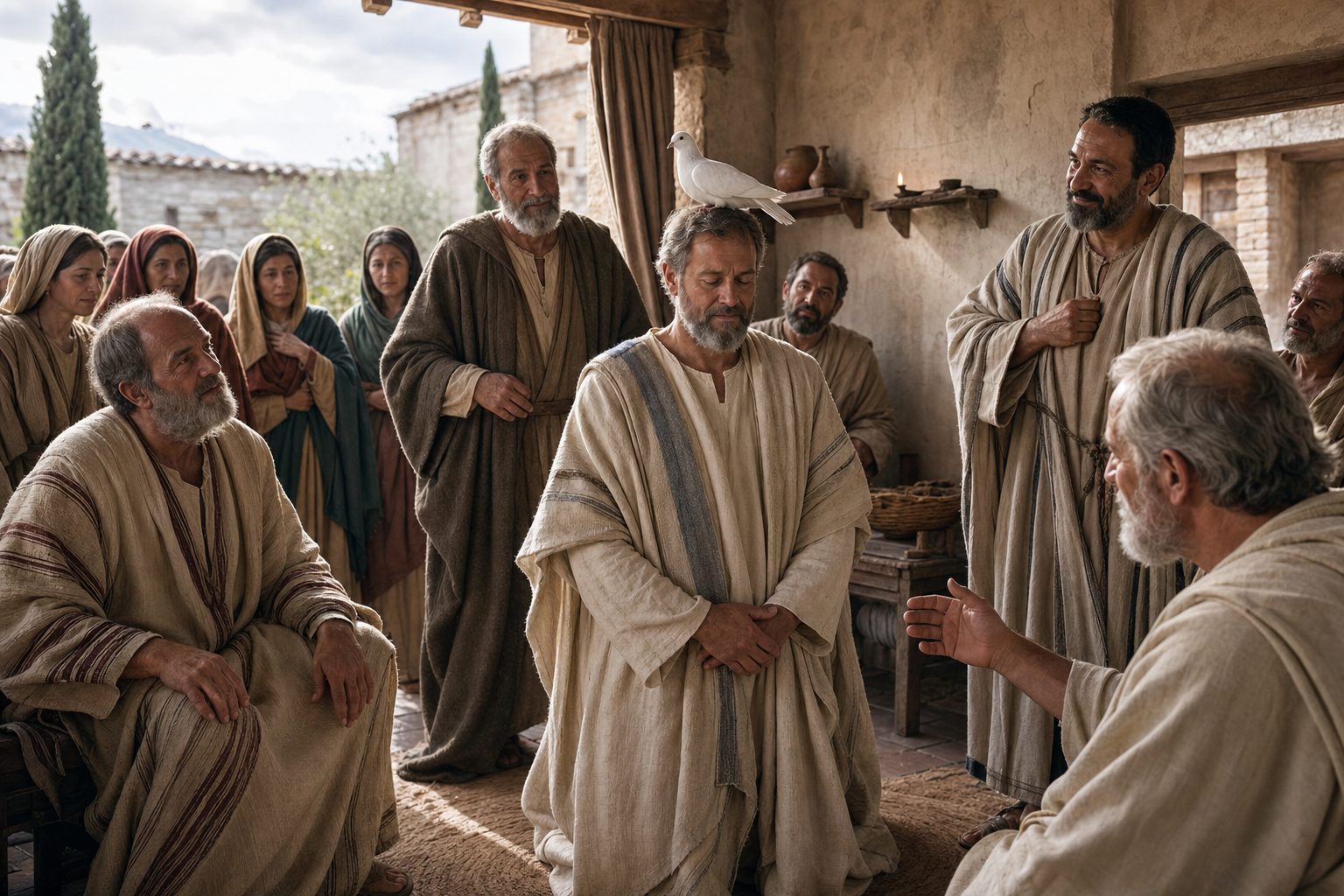
When the election was over, disagreements arose, and suddenly a white dove appeared above their heads; when he came down, he sat on the head of the presbyter Fabius, and then rose again and became invisible. Then all understood that the Lord Himself by His Holy Spirit had chosen Fabius to be the head and shepherd of His church, and they set him on the patriarchal throne with great joy. Thus, St. Fabius became the pope of Rome; and in the church of Christ there was peace.
The torturer Maximinus was killed by his soldiers, and Gordianus [Gordian <unk> emperor from 238] took the throne, ending the persecution: this king, though he was a pagan, was mild-tempered and kind, and forbade the persecution of Christians.
St. Fabius built many small temples over the graves of the martyrs in the burial caves, where the faithful gathered for prayer, and he built chapels over the caves that served as a refuge during persecutions.
The church grew, thanks to the daily conversion of pagans from wickedness to Christianity; it reached a special prosperity after the death of Gordian, when Philip [Philip the Arabian <unk> Emperor 244-249], who shared the government with his son, also Philip, took his place; both of them accepted Christianity, having been educated by one pious and noble man Pontius [His life is placed under the present number]; the holy pope Fabius baptized them.
At this time the number of believers increased especially: following the example of the king and his son, many were baptized, and the faith of Christ could be freely and fearlessly professed.
But the church did not long, <unk> only about four years, <unk> enjoy this peace and freedom: its head Christ, wishing that his bride, for whom he shed his blood, was here on earth like gold tested in the furnace and like a flower among thorns, again allowed her to suffer tribulations and sufferings, and began the persecution raised by the dragon of hell, which, as the Lord revealed to John the Theologian in a vision, persecuted the woman shining in heavenly majesty,
And a river of water came out of his mouth to overwhelm her.
This ancient hater of goodness, intolerant of the growth of the glory of Christ, rose up against the pious kings who had accepted Christianity. The heathen who hated Christ and the Christians, gathered under the leadership of the wicked Decius, killed King Philip and his son precisely because they believed in Christ and allowed the free professing of the Christian religion.
After the death of the kings, they turned to the Christians; at that time the blood of the Christians flowed like a river. The Holy Pope Fabius was captured first of all: he, as a representative and teacher of Christians, was especially hated by the pagans.
Pope Fabius was beheaded, and went with many of the sheep of his flock, who had been slain at the same time, from the warring church to the victorious church, and St. Pontius was taken afterwards, and suffered martyrdom for our Lord Jesus Christ, to whom be glory for ever, Amen.
On the same day the memory of the holy martyrs: Candidius and Candidiana, stoned in Egypt, and Sibela, killed in Egypt by arrows.